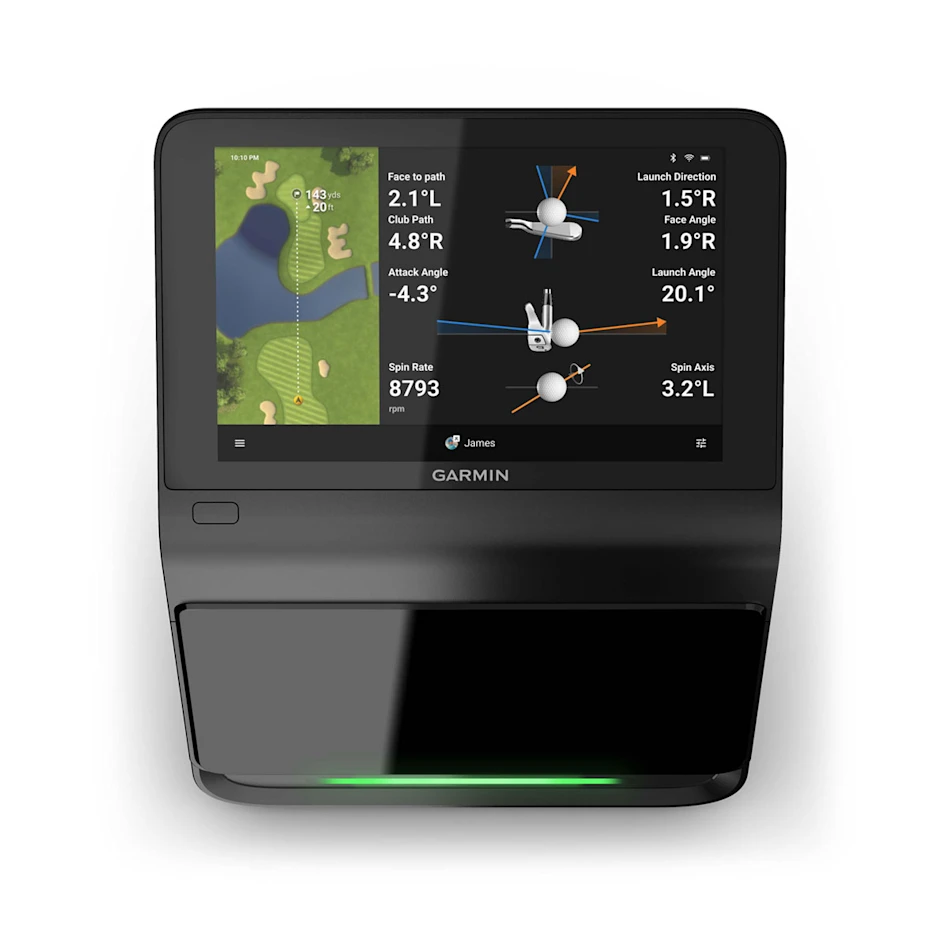
The Garmin Approach R50 is Garmin’s top-of-the-line portable launch monitor, combining tour-level shot metrics, a built-in touchscreen, and a full simulator experience in a single device. After extensive testing on the range, in backyard setups, and in home simulators, here’s a detailed look at its features, performance, and overall value for serious golfers.
Garmin R50 Overview: Specs, Performance, and Use Cases
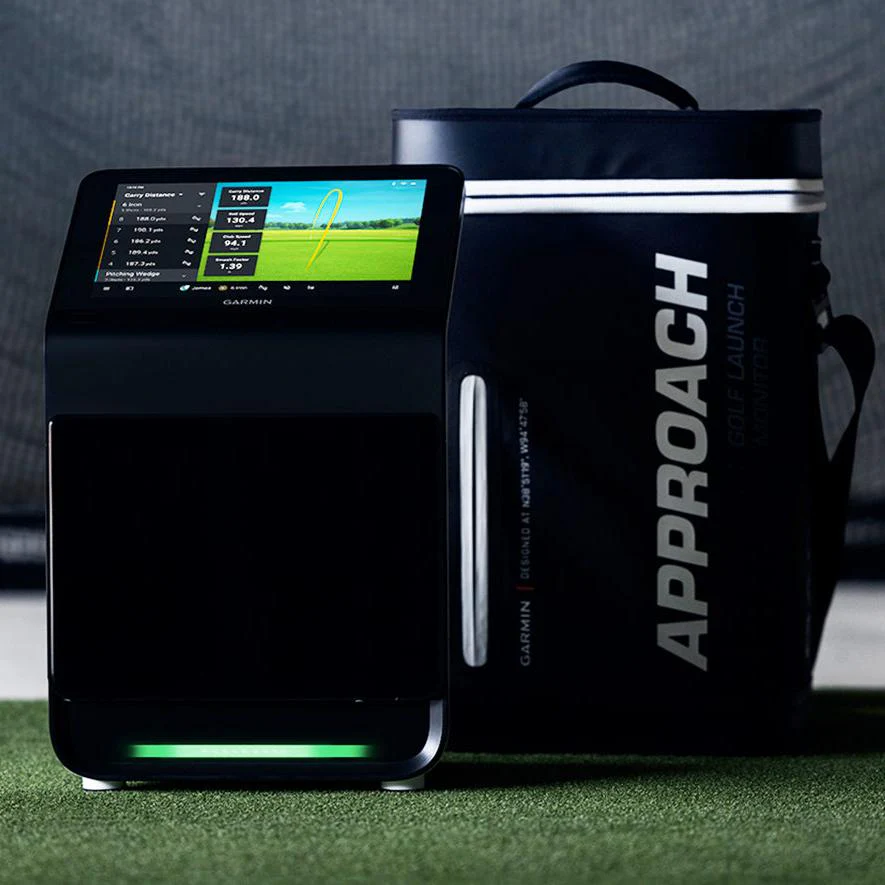
The R50 is a premium, all-in-one golf launch monitor and simulator designed for serious golfers, instructors, and home simulator enthusiasts. Unlike many monitors that rely on a connected phone or tablet, the R50 features a 10″ built-in touchscreen, letting you analyze shots, play virtual courses, and review metrics directly on the device.
Key highlights:
• Portable design with up to 4 hours of battery life.
• Triple high-speed camera system for precise ball and club tracking.
• Full simulator support with thousands of courses and global tournaments.
Where the Garmin R50 Fits in the Market
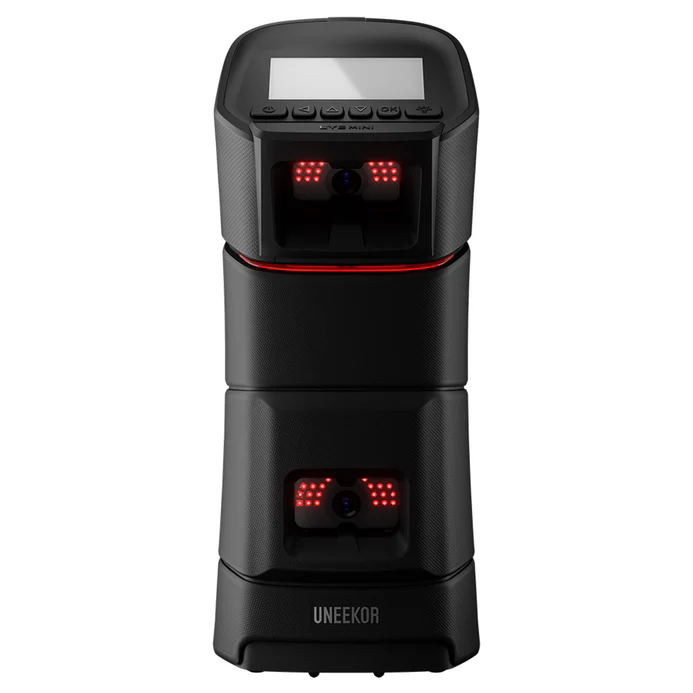
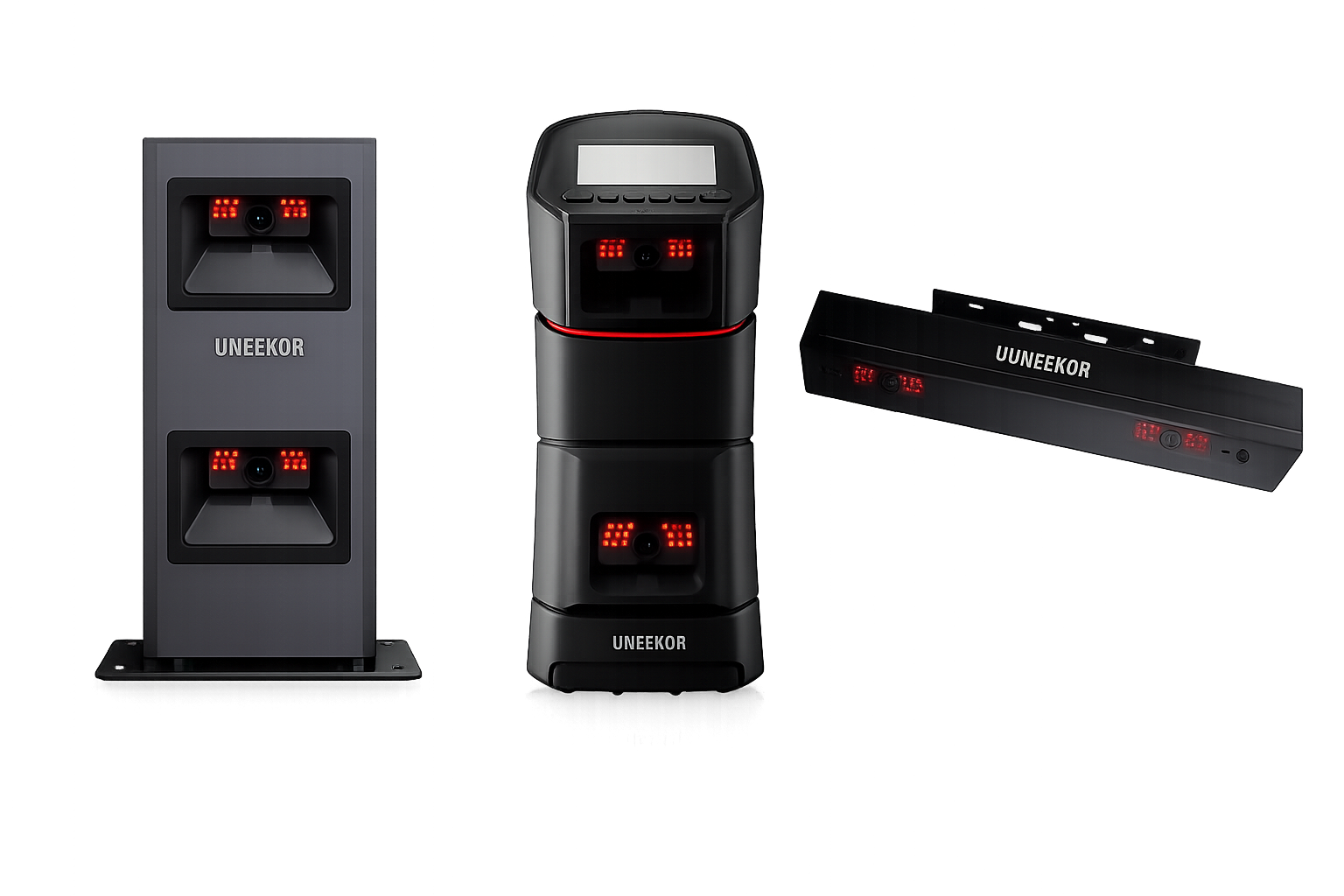
At roughly $5,000, the R50 competes directly with camera-based systems like the Uneekor Eye Mini and SkyTrak ST Max, as well as radar-camera hybrids such as the FlightScope Mevo Gen2.
What separates the R50 isn’t just raw accuracy — it’s integration. While many systems require a tablet, laptop, external swing cameras, or third-party software to unlock their full experience, the R50 delivers metrics, impact video, and simulator functionality directly on its built-in touchscreen.
For golfers who value simplicity and cohesion, that matters.
Garmin R50 Features and Capabilities
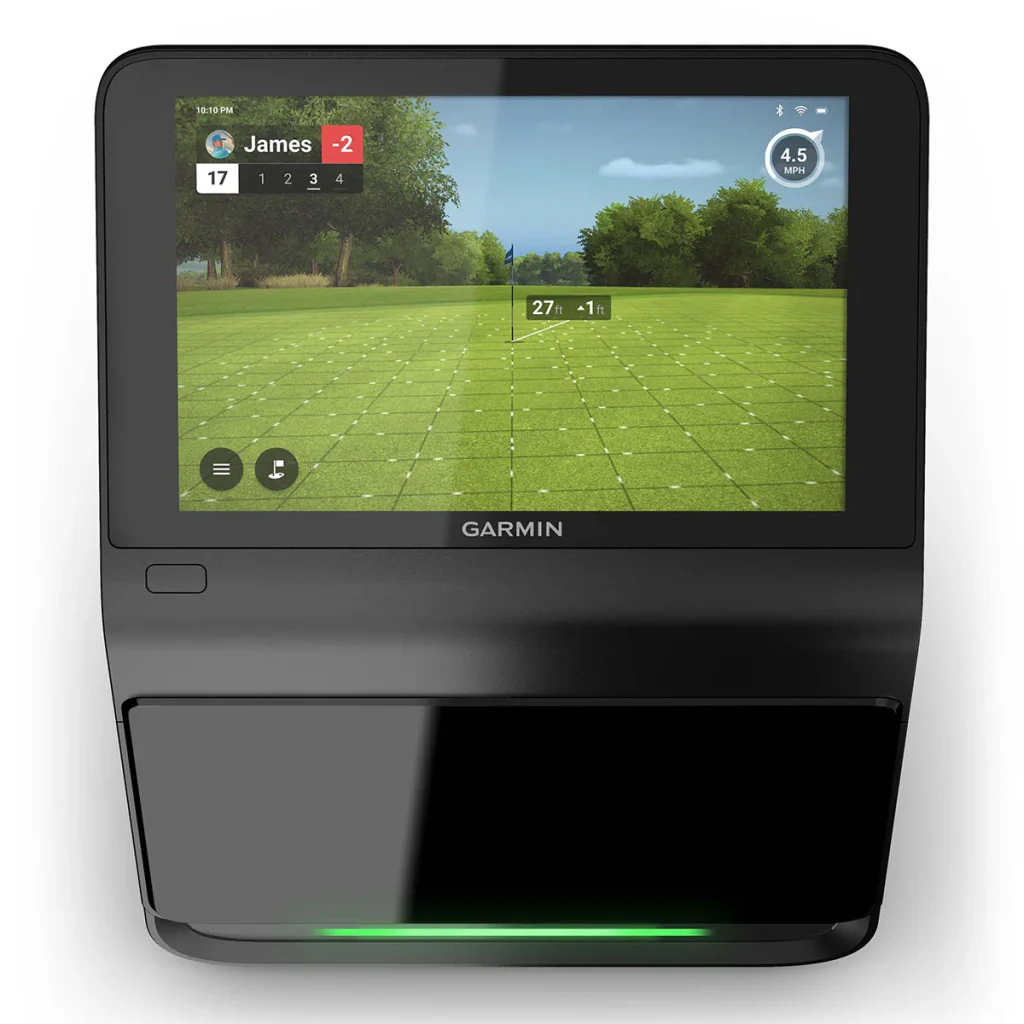
From the moment you power it on, the R50 delivers a robust set of features:
• All-in-one monitor + simulator: Built-in 10″ high-resolution touchscreen for intuitive navigation.
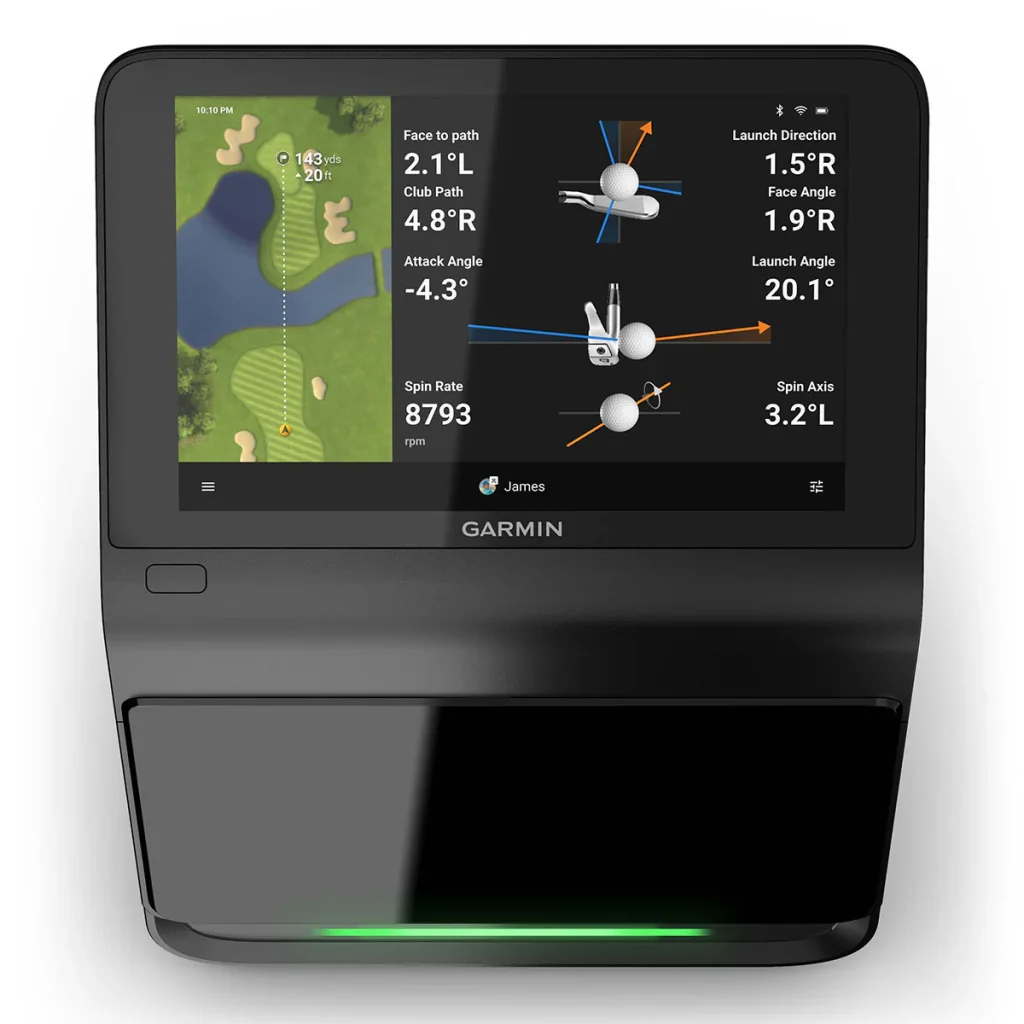
• Ball and club tracking: Measures 16+ metrics including ball speed, launch angle, spin rate, club speed, and more.
• Internal barometer: Refines carry distance calculations based on environmental conditions.
• High-speed impact video: Review strikes visually alongside metrics.
• Virtual golf simulator: Access thousands of courses and global tournaments.
• HDMI output: Mirror the screen to a TV or projector for large-format play.
• Portability: Carry case included; battery lasts ~4 hours.
In hands-on testing, the R50 was simple to set up and began capturing accurate data within a few swings.
Image Suggestion: Insert a close-up image of the touchscreen showing shot data and metrics.
Garmin R50 Practice and Improvement Tools
The R50 isn’t just about numbers — it’s a full practice platform:
• Detailed shot data: Ball and club metrics displayed in real time to diagnose tendencies.
• Session comparison: Track and compare stats across multiple practice sessions.
• Impact video feedback: High-speed camera captures each strike, pairing visual and numerical feedback.
• Virtual play: Practice rounds become engaging with leaderboard and multiplayer options.
Pro Tip: Proper alignment and consistent positioning are key for reliable carry distance measurements.
Indoor vs Outdoor Performance
In outdoor range testing, the R50 performed reliably with strong carry consistency and stable spin readings. The built-in barometer adjustment helps refine distance accuracy in changing conditions, which is something many golfers overlook.
Indoors, the triple-camera system provides excellent ball tracking in properly lit environments. Like all camera-based systems, lighting and alignment matter. Once dialed in, performance felt consistent — though radar-only units may offer slightly longer battery life for extended outdoor sessions.
The R50 is strongest in structured indoor simulator environments, where its integrated display and impact video truly shine.
What Surprised Us
The biggest surprise with the R50 isn’t a specific metric — it’s how much friction it removes from practice. Being able to review impact video and shot data directly on the unit changes how often you actually use it. There’s no scrambling for a tablet or juggling apps. Over time, that convenience becomes one of the most valuable features.
Pros of the Garmin R50
• Self-contained unit — no tablet or laptop required.
• Ball and club metrics feel consistent across full swings and partial wedges when properly aligned.
• Built-in simulator with an expansive course library.
• High-speed impact video for swing analysis.
• Multiplayer and global tournament options for engaging practice.
• HDMI output expands display options.
Image Suggestion: Optional graphic showing “R50 Pros at a Glance” with icons for each benefit.
Cons of the Garmin R50
• Premium price ($5,000 MSRP).
• Battery life is ~4 hours, shorter than some radar-only units.
• Requires club stickers for full club metrics.
• Home Tee Hero courses require Garmin Golf subscription for full access.
• Occasional firmware quirks and initial calibration sensitivity require patience during setup.
Garmin R50 Price and Value
The Garmin R50 sits in the premium segment at around $4,999 MSRP.
At $4,999 MSRP, the R50 sits firmly in the premium tier. That price places it alongside systems known for professional-grade ball tracking and simulator realism.
The question is not whether the R50 works — it does. The real consideration is whether you value its all-in-one integration enough to justify the cost compared to modular systems that require separate displays, cameras, and software licenses.
For golfers building a dedicated simulator and wanting minimal setup complexity, the R50 may feel worth the investment. For those comfortable assembling their own setup, alternatives can offer similar data at lower entry costs.
Garmin Approach R50
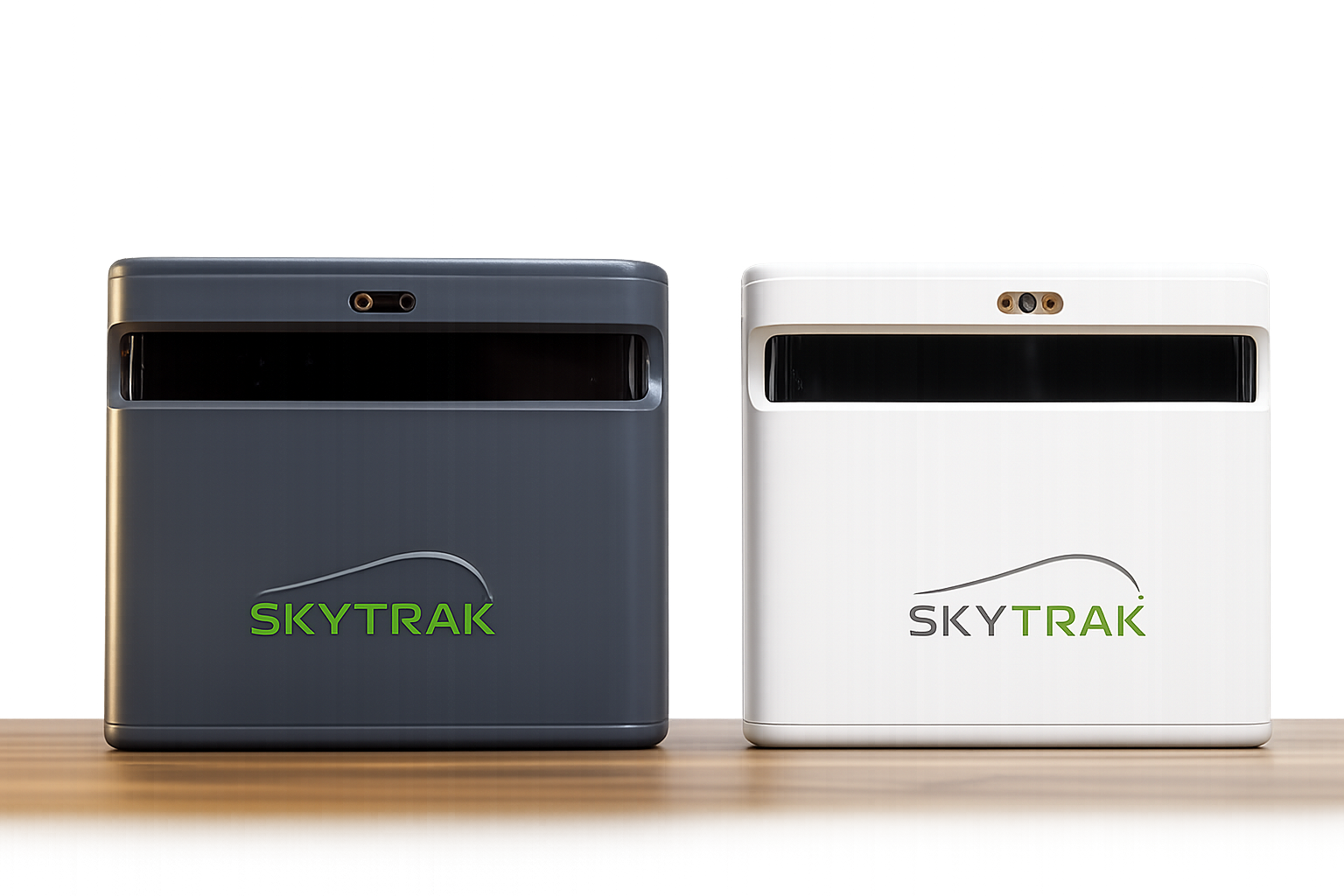
The SkyTrak ST Max delivers the most refined version of SkyTrak’s photometric tracking platform, built for golfers who prioritize maximum indoor consistency and simulator precision.
Affiliate Disclosure: If you purchase through this link, we may earn a commission at no additional cost to you.
Garmin R50 Final Take: Who Should Buy It
The Garmin R50 is one of the most cohesive launch monitors available today. It blends camera-based precision, integrated impact video, and full simulator capability into a self-contained platform that feels polished and purpose-built.
It is best suited for:
- Dedicated home simulator builders
- Golfers who want integrated video without external cameras
- Players who value touchscreen simplicity
- Serious amateurs focused on measurable improvement
It may not be ideal for:
- Budget-conscious buyers
- Golfers who prefer fully open software ecosystems
- Players who primarily practice outdoors for long sessions
The R50 isn’t simply a launch monitor — it’s an integrated golf technology platform. For the right golfer, that cohesion justifies its premium position. For others, modular systems may offer better cost-to-performance balance.